
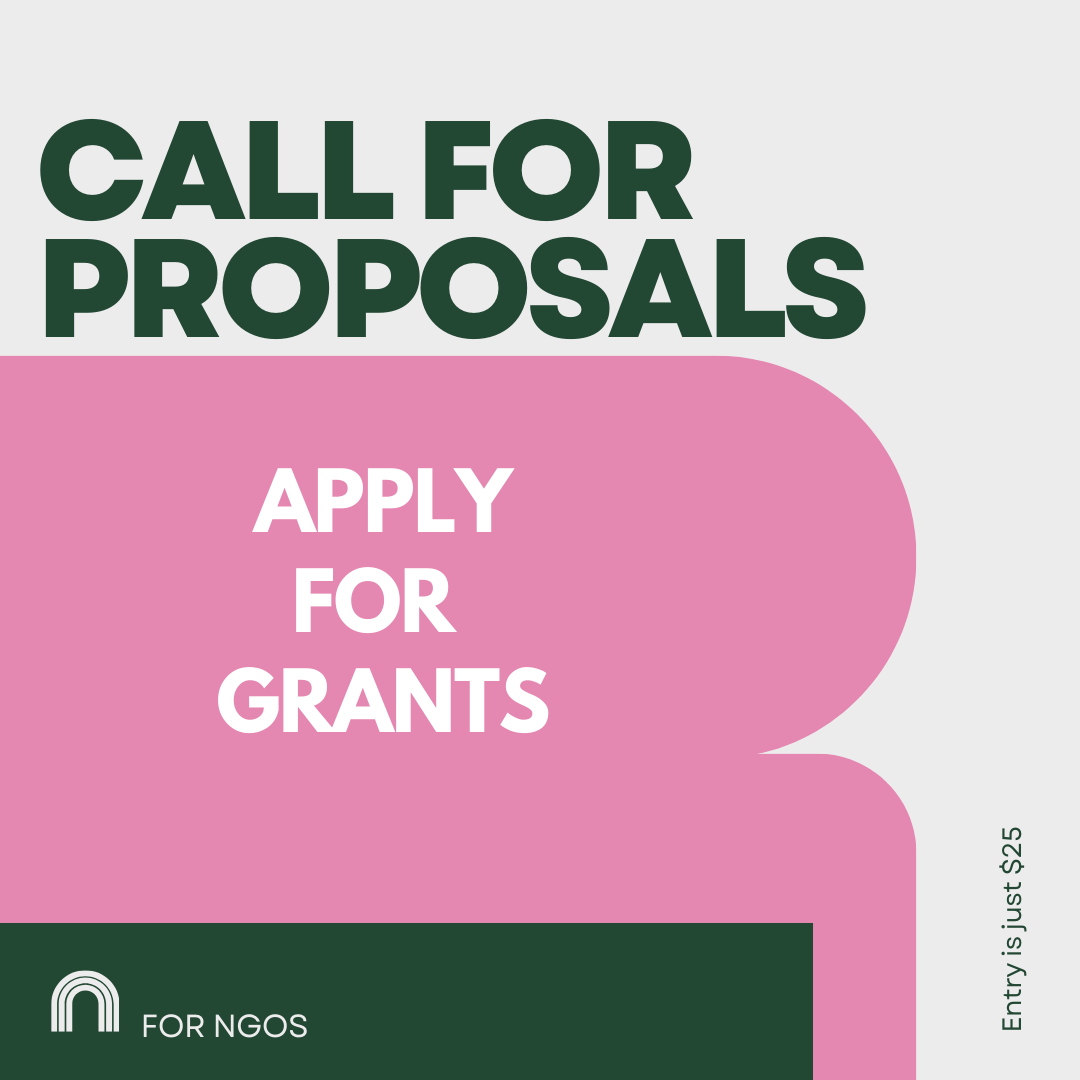
2026 Grants Proposals Invited for Blue Action Fund Grant for Mangroves Blue Carbon Markets and 30×30 in Asia, Blue Action Fund (Blue Action) has launched a new open call for proposals focused on mangrove conservation and blue carbon development in Asia. The funding supports projects that combine area-based conservation, mangrove protection and restoration, and high-integrity blue carbon initiatives, contributing to the Kunming-Montreal Global Biodiversity Framework’s 30×30 target and climate action.
Grants are available to NGOs in Indonesia, the Philippines, Vietnam, and India for projects that focus on:
- Establishing or improving protected areas (PAs) and/or OECMs, particularly for mangrove ecosystems.
- Protecting, restoring, and sustainably using mangroves to support biodiversity, climate mitigation and adaptation, and local livelihoods.
- Developing high-integrity blue carbon initiatives toward carbon crediting.
The call aims to address financing gaps and reduce early-stage risks in blue carbon projects by supporting technically sound initiatives with strong governance, environmental and social safeguards, and community benefits. Projects should link credible blue carbon pathways with long-term conservation and improved management of PAs/OECMs.
Blue Action also recognises evolving carbon-market regulations, including Article 6 of the Paris Agreement, and seeks to support blue carbon projects with strong environmental and social integrity and potential for Article 6 authorisation.
Applicants are encouraged to carefully review the full details and submit their applications before the specified deadline to seize this grant opportunity.
Last Date of Submission: 16th October 2026
2026 Grants Proposals Invited for Blue Action Fund Grant for Mangroves Blue Carbon Markets and 30×30 in Asia
Project Requirements
Blue Action is seeking proposals for mangrove conservation and blue carbon projects that:
- Are implemented in Indonesia, the Philippines, Vietnam, or India.
- Request EUR 2–4 million in Blue Action funding.
- Can be completed within 5 years or less.
- Conserve or restore at least 1,000 hectares of mangrove ecosystems through protected areas (PAs) and/or OECMs.
- Support sustainable livelihoods, community participation, capacity building, equitable benefit-sharing, and gender equity.
- Demonstrate a credible pathway toward high-integrity carbon credits, including:
- A clear route to market and potential buyers.
- Alignment with recognised carbon standards such as Plan Vivo, Verra VM0033, or Gold Standard.
- Aiming for Article 6 authorisation under the Paris Agreement.
- On-the-ground conservation and restoration activities that generate climate benefits.
- Clear understanding of carbon rights, land-use rights, and relevant regulations.
- A pathway to long-term financial sustainability, including potential carbon revenues and benefit allocation.
- Consideration of risk-transfer mechanisms, including parametric insurance.
2026 Grants Proposals Invited for Blue Action Fund Grant for Mangroves Blue Carbon Markets and 30×30 in Asia
Eligibility
- Applicants must be charitable NGOs or NGO consortia with relevant experience in mangrove conservation/restoration, blue carbon, and sustainable livelihoods.
- Consortia must have access to technical expertise in carbon accounting, MRV, methodologies, financial feasibility, and PDD preparation.
- NGOs must provide at least 25% match funding of total project costs.
- Applicants must have experience with environmental and social management and stakeholder engagement, including FPIC processes.
- Projects must have completed sufficient pre-feasibility or feasibility work and demonstrate technical and institutional readiness for carbon crediting.
- Project areas must meet recognised standards for effective protection and management.
- OECMs must meet internationally recognised criteria for boundaries, governance, and long-term biodiversity outcomes.
- Projects must receive endorsement from the relevant national authority.
Application Process & Funding
Blue Action uses a two-stage application process: a competitive Grant Application stage followed by a collaborative Full Proposal Development stage for selected applicants. The second stage includes technical refinement, detailed budgeting, results framework development, and environmental and social safeguards.
The total funding envelope is up to EUR 17 million, with Blue Action seeking additional funding that could increase the available amount.
Why This Grant Opportunity Is Important
The Blue Action Fund’s mangrove and blue carbon funding window is important because it brings conservation, climate finance, and coastal livelihoods together in one large-scale funding opportunity. The call offers grants of EUR 2–4 million per project and focuses specifically on India, Indonesia, the Philippines, and Vietnam.
- Large-scale funding: NGOs can seek substantial funding for projects covering at least 1,000 hectares of mangroves.
- Combines conservation and climate action: Projects can protect biodiversity while restoring mangroves that store carbon and help communities adapt to climate impacts.
- Supports long-term financing: The blue carbon component creates a potential pathway toward carbon-credit revenues that can help sustain conservation beyond the grant period.
- Benefits coastal communities: Projects are expected to strengthen livelihoods, participation, governance, and equitable benefit-sharing.
- Supports global conservation goals: The programme links mangrove conservation with the 30×30 biodiversity target and climate mitigation.
- Opportunity for Indian NGOs: Organisations working on mangroves, coastal conservation, climate resilience, and community livelihoods in India can apply.
- Strong financial scale: The overall funding envelope is up to EUR 17 million, making this a significant opportunity for established conservation organisations.
Tips for Preparing a Strong Proposal
- Demonstrate a clear 1,000+ hectare conservation landscape
Clearly define the project geography, mangrove area, ecological importance, existing threats, and why the proposed scale can support a viable blue carbon project. - Connect conservation with blue carbon from the beginning
Do not present carbon credits as a separate component. Show how mangrove protection and restoration will generate measurable climate benefits while delivering biodiversity and livelihood outcomes. - Show technical readiness
Since projects must build on previous preparatory work, include existing assessments such as carbon-stock studies, feasibility assessments, tenure mapping, stakeholder analysis, regulatory reviews, and additionality assessments. - Build a credible carbon-credit pathway
Explain the proposed carbon standard, MRV approach, methodology, potential buyers, route to market, and how the project could progress toward Article 6 authorisation. - Put communities at the centre
Explain how coastal communities will participate in decision-making and how benefits—including potential carbon revenues—will be shared fairly. Address gender equity and FPIC requirements. - Be realistic about financial sustainability
Provide indicative assumptions about carbon revenues, project costs, risks, and how revenues could support protected-area management and community benefits after grant funding ends. - Use strong partnerships
If the NGO lacks specialist carbon expertise, consider forming a consortium with organisations experienced in carbon accounting, MRV, methodology application, financial modelling, and PDD preparation. - Demonstrate government support and regulatory awareness
Explain relevant land-use, carbon-rights, protected-area, and national carbon-market regulations and obtain the required endorsement from the appropriate national authority. - Show measurable outcomes
Include specific targets for mangrove restoration, hectares under effective management, carbon sequestration/emissions avoided, biodiversity outcomes, livelihoods, community participation, and financial sustainability. - Avoid an overly conceptual proposal
This opportunity is designed for projects that are already sufficiently developed. A proposal that starts with only an idea, without feasibility or preparatory studies, is unlikely to be competitive.
How to apply?
If you would like to apply for a Blue Action grant, please fill out the Grant Application template
and send it electronically in Word or PDF format [<5MB file size] to grants@blueactionfund.org
with the subject line ‘[your organisation] Grant Application’ by 16 October 2026. All other
documents relevant to applicants can be found on Blue Action’s website:
https://www.blueactionfund.org/documents.
Blue Action is a foundation that supports the UN Convention on Biological Diversity and
furthers the 2030 Agenda for Sustainable Development, in particular SDG 14. Blue Action is
financed by the German Federal Ministry for Economic Cooperation and Development, the
Swedish Ministry for Foreign Affairs, the Agence Française de Développement, the Norwegian
Agency for Development Cooperation, and Irish Aid. It also received funding from the Green
Climate Fund to support Ecosystem-based Adaptation in the Western Indian Ocean.
You can find more information about our current Grant Programme on our website.
Note: For more comprehensive details click the link below
Get full access to the grant information, visit the Official Website Link
Frequently Asked Questions
- Who can apply for the Blue Action Fund grant?
Charitable NGOs or NGO consortia with proven experience in mangrove conservation/restoration, blue carbon development, and sustainable livelihoods can apply. Projects must be implemented in India, Indonesia, the Philippines, or Vietnam.
- How much funding can an organisation request?
Applicants can request between EUR 2 million and EUR 4 million from Blue Action. NGOs must provide at least 25% match funding of total project costs.
- What is the minimum mangrove area required?
Projects must focus on mangrove ecosystems covering at least 1,000 hectares and demonstrate that the scale is sufficient to provide a credible basis for financially viable blue carbon development.
- Does the project need to already have a carbon-crediting project in place?
Not necessarily, but applicants must demonstrate sufficient technical and institutional readiness. Existing feasibility or pre-feasibility work and evidence such as carbon assessments, stakeholder mapping, regulatory analysis, or financial viability assessments are expected.
- What is the application deadline?
The current deadline is 16 October 2026. The funding call has an overall envelope of up to EUR 17 million.
No more Google search, join our Whats App Channel and get alerts as soon as we publish a post.
Hey, STEAL our Best Premium Content For Absolutely Free, Check Out the Links below
HOPE these will add value to your existing skills and knowledge
Our information bears no cost (it’s absolutely FREE), don’t let valuable information slip away.
Join our community of avid readers who are always in the know. Subscribe to our website; stay connected and engaged with the latest news, trends, and developments by subscribing today.
(PUSH the bell ICON)
Leverage the power of knowledge to propel your organization to new heights. Don’t miss out to explore our content
- Latest Funds for NGOs,
- NGO Jobs
- Resources (Helpful Guides and Courses)
- Premium Resources
- NGO related articles
Grants for NGOs, NGO Jobs, Resources, Nonprofit Fellowships Programs and Funds for NGOs – Empowering Your Mission
Sharing is Appreciated





1 COMMENT